/sc-assets/prd/practices/6337d364-c565-473f-892f-3262d1a5d020/best-ambulatory 2025-1730838922341.png)

Don't Delay Your Colonoscopy Screening: Why the Procedure is Easier Than You Think
Don't Delay Your Colonoscopy Screening: Why the Procedure is Easier Than You Think
Nov 02, 2026
Many delay their appointments, fearing discomfort and pain. In reality, a colonoscopy is painless, and to ensure you won’t feel uncomfortable, light sedatives are often used to help you relax throughout the procedure.
Colonoscopies are used for a variety of reasons, sometimes to diagnose digestive conditions, and other times to check for bleeding, structural issues, obstructions, and even signs of infections. However, by far, colonoscopies are the number one preventive tool in colon cancer screening, as they can identify problematic polyps even before they become cancerous and detect cancerous lesions, leading to better health outcomes.
To help you feel more at ease about what to expect during your colonoscopy, we asked our experts at Carolina Digestive Health Associates to share what actually happens during the procedure.
What happens during a colonoscopy?
Before your colonoscopy, you’ll be asked to follow a specific diet and take laxatives to fully empty your colon. The purpose of the diet and laxatives is to clean your colon so your provider can get a better look at the tissues.
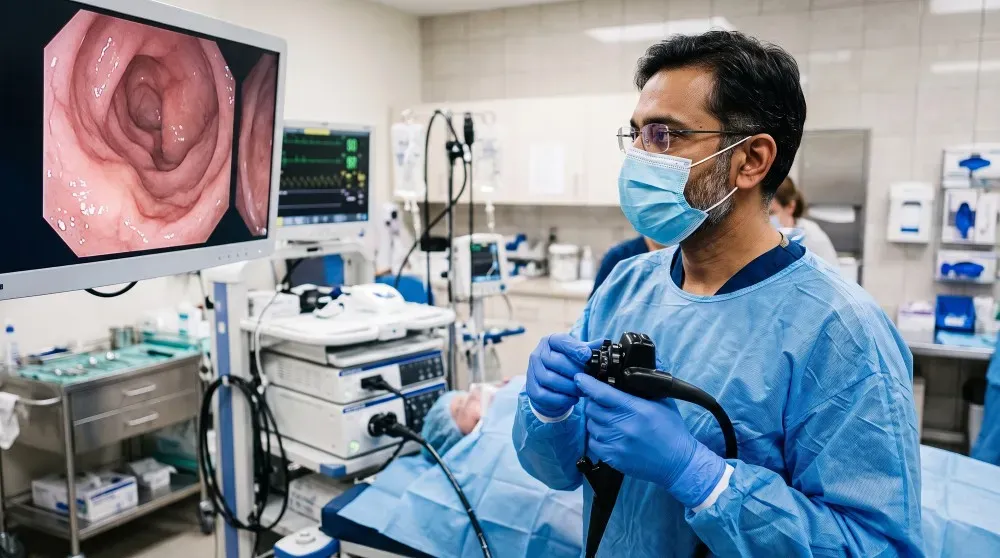
The colonoscopy involves inserting a thin, flexible tube equipped with a camera into your rectum to examine the tissues of your colon. During the colonoscopy, if polyps appear on the screen and are non-cancerous, they can also be removed before they cause any problems.
Recovery after the procedure
The whole procedure can last anywhere between 30 and 60 minutes, after which you can return to your daily activities once the sedation wears off. During the examination, there’s generally no pain, at most just a little discomfort. Afterward, you may feel some bloating or cramping, which generally subsides quickly.
While a colonoscopy does not require downtime, you will need someone to drive you home from the clinic, as your judgment and senses may be impaired by the anesthesia.
Schedule your colonoscopy with us
Screening recommendations depend on your age, medical history, and family history. Digestive disorders, blood in your stool, unexplained weight loss, or cramping are often investigated with a colonoscopy.
Above the age of 45, most adults benefit from the procedure as a preventive measure, as colonoscopies can catch abnormalities early on and drastically reduce the chance of complications related to cancerous growths.
A study showed a 45% reduction in colorectal cancer incidence among participants who underwent screening as intended.
If you are due for a colonoscopy and want to learn more about the procedure, contact us to schedule an appointment at one of our offices located in Belmont and Charlotte, North Carolina.
Our experts will let you know the next steps and whether a colonoscopy is the right procedure for you at this time.